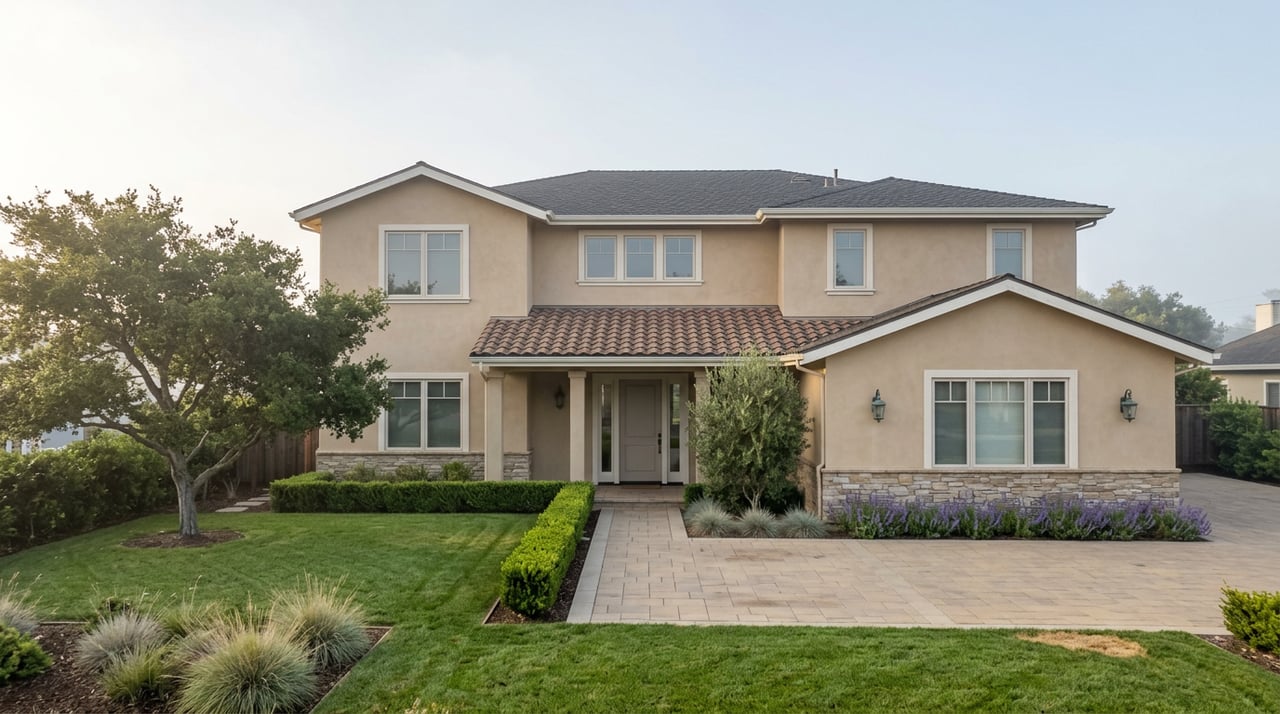
Apple Hill Estates' Median Price Is Down 11 Percent. Or 8 Percent. Or 6 Percent. Here's Why All Three Numbers Are True.
September 3, 2026
September 3, 2026
A family cross-shopping Brentwood neighborhoods this summer pulled up three different real estate sites in one evening, all showing Apple Hill Estates. One said the median sale price was down 11 percent over the past year. Another, checked twenty minutes later, said 8 percent. A third said 6 percent. Same gated community, same zip code, three different declines, all reported as current fact.
None of the sites were wrong. That's the part worth sitting with before you make a decision based on any single number you see for this neighborhood.
Here's what's actually happening on the ground. As of early 2026, Apple Hill Estates had four houses for sale. Four. Their asking prices ranged from $698,500 to $999,999, a spread of more than $300,000 across a handful of listings in one gated subdivision.
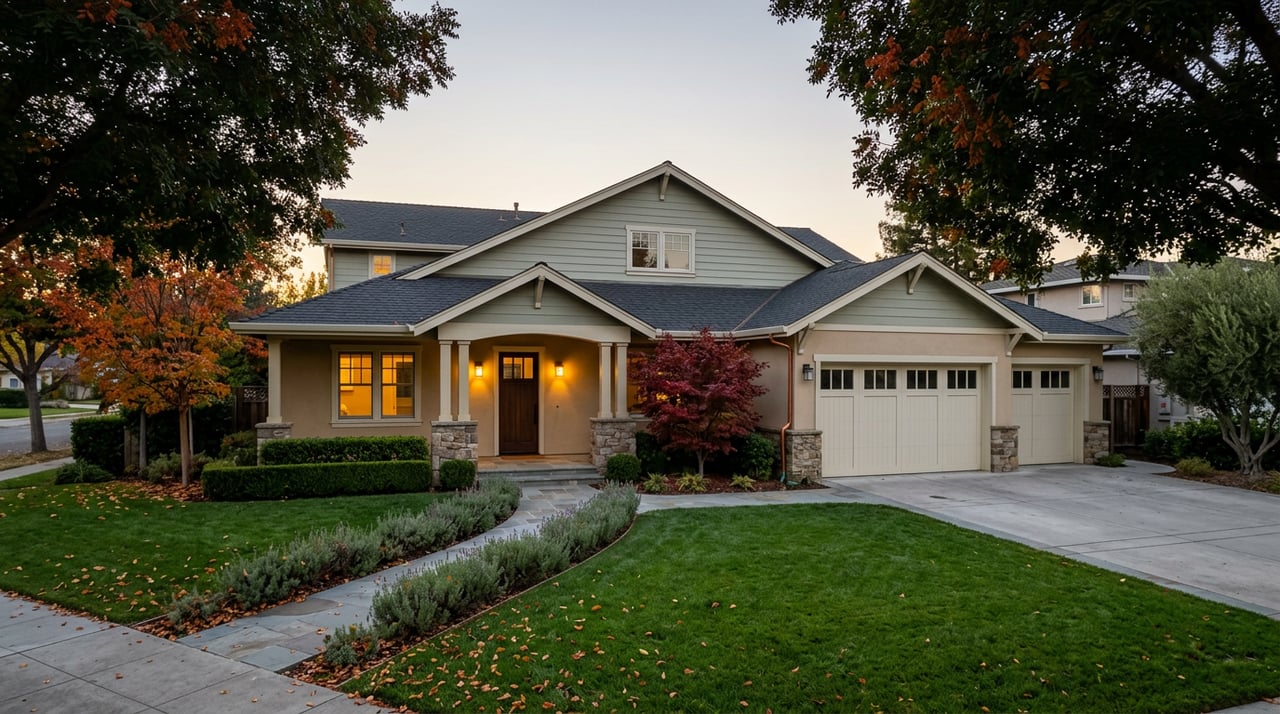
That range isn't a fluke. Apple Hill Estates has been building out in phases since 1992, and the homes inside it run from 1,515 square feet up to 4,649 square feet. Craftsman-style houses sit alongside new traditionals and fully custom builds, many with Mediterranean touches like stucco siding and tile roofs. There is no single "typical" Apple Hill house. There's a small resale-only enclave where a starter-sized single story and a 4,600-square-foot estate with a sweeping staircase and a downstairs guest suite can both legitimately claim the same neighborhood name.
When a market has that few transactions and that much variation in what's trading, the median isn't a stable read on value. It's a snapshot of whichever specific houses happened to close in whatever window a given site is measuring.
The three figures the family found weren't contradictory reporting. They were three different slices of the same thin data pool, pulled at slightly different points in 2026:
| What was measured | Median sale price | Year-over-year change | Days on market |
|---|---|---|---|
| Trailing 12 months, houses-for-sale filter | $735,000 | down 11% | 53 (vs. 53 national avg) |
| Trailing 12 months, general neighborhood page | $754,375 | down 6% | 42 (vs. 53 national avg) |
| Trailing 12 months, local guide page | $755,000 | down 8% | 50 (vs. 55 national avg) |
Swap even one or two closings in or out of a trailing 12-month window, and the reported percentage change moves by several points, because the total number of closings is so small to begin with. A single custom estate closing in December instead of January can shift which 12-month bucket it lands in and change the headline entirely.
What doesn't move much across all three readings: days on market. Homes here are selling in roughly six to seven weeks, right in line with or faster than the national average. That's the number that actually tells you something about demand. The price percentage is mostly noise from a small sample.
A few things shape true cost of ownership in this specific neighborhood:
None of that shows up in a sale-price comparison, but it shows up in a monthly budget and in how a house actually lives day to day.
One more local specific worth knowing before you assume you understand this pocket of Brentwood: part of Apple Hill sits within Planned Development No. 42, the city's designation for the Gregory Ranch Planned District. PD-42 permits a mix of complementary uses nearby, including small-scale office, commercial and retail space, restaurants, and other service businesses. If you're evaluating a house here for the long haul, it's worth understanding what that zoning could eventually allow adjacent to the neighborhood, rather than assuming the surrounding parcels are frozen in their current form.
Downtown Brentwood itself is a short drive away, and it still carries the kind of local character that doesn't show up in a listing sheet. As one longtime area broker with nearly 30 years of experience put it when asked where to eat: he'd send people downtown to Zephyr's, and to catch a movie at The Delta, a restored historic theater still running first-run films.
If you're selling in Apple Hill Estates, resist the urge to price off a headline percentage you found on one site. Ask whoever's helping you sell to pull the specific homes that are truly comparable to yours in size, vintage, and lot, not the neighborhood-wide median from a portal that's averaging a 1,500-square-foot resale against a 4,600-square-foot custom build. That's the only number that will price your specific house correctly.
If you're buying, the thin inventory cuts both ways. There's less competition for any given listing, which can work in your favor on negotiation. But there's also less selection, so when a house in your target size and price band does come up, you may not get a second one like it for months. Knowing the real mechanism behind the median, mix-shift and low transaction volume rather than a genuine drop in neighborhood demand, should change how much weight you put on the percentage and how much you put on the specific house in front of you.
Why do different real estate sites show different median prices for the same neighborhood? Each site defines its measurement window and filters differently, some track closed sales only, others blend list and pending prices, and all of them are working from a small pool of transactions in a neighborhood this size. A handful of closings shifting in or out of a trailing period can move the reported percentage by several points without reflecting any real change in value.
Does a falling median mean Apple Hill Estates is losing value? Not necessarily, and the data here doesn't support that conclusion on its own. Days on market has stayed in line with or faster than the national average across every source, which is typically a better signal of demand than a percentage swing driven by a handful of transactions in a small, size-diverse enclave.
What is PD-42 and why does it matter for Apple Hill Estates? PD-42, the Gregory Ranch Planned District, is Brentwood's planned-development zoning designation covering part of the surrounding area. It permits a mix of office, small-scale retail, restaurant, and service uses. It's worth understanding for anyone planning to own here long term, since it shapes what could eventually be built near the neighborhood.
Numbers like these are exactly why a market conversation should start with the specific house, not the headline. If you're weighing a move in Apple Hill Estates or anywhere else in Brentwood, Danielle Campbell can walk through the real comps for your situation. Let's Connect.
This article is general information, not legal, tax or financial advice. Consult a qualified professional about your situation.
Stay up to date on the latest real estate trends.


I am committed to guiding you every step of the way—whether you're buying a home, selling a property, or securing a mortgage. Whatever your needs, I've got you covered.
Danielle Campbell | CA DRE# 01875600
Brentwood, CA 94513